






Sal Island Full-Day Tour: The Complete North Route Itinerary
The Perfect Sal Island Full-Day Itinerary. Step beyond the resort walls of Santa Maria and head into the raw, volcanic north. In a single 8-hour journey, you can walk alongside wild lemon sharks, watch a cave glow like an electric eye, and float in a volcanic crater denser than the Dead Sea.
Whether you plan to rent an off-road vehicle or book a guided excursion, here is the exact, field-tested itinerary to explore Sal Island from coast to coast — packed with logistical secrets that only local operators know.
The Master Route Map at a Glance
[Santa Maria Pier] ──► [Murdeira Bay] ──► [Espargos & Terra Boa]
│
[Pedra de Lume] ◄── [Shark Bay] ◄── [Buracona / Blue Eye] ◄─┘
08:30 AM – The Heartbeat at Santa Maria Pier
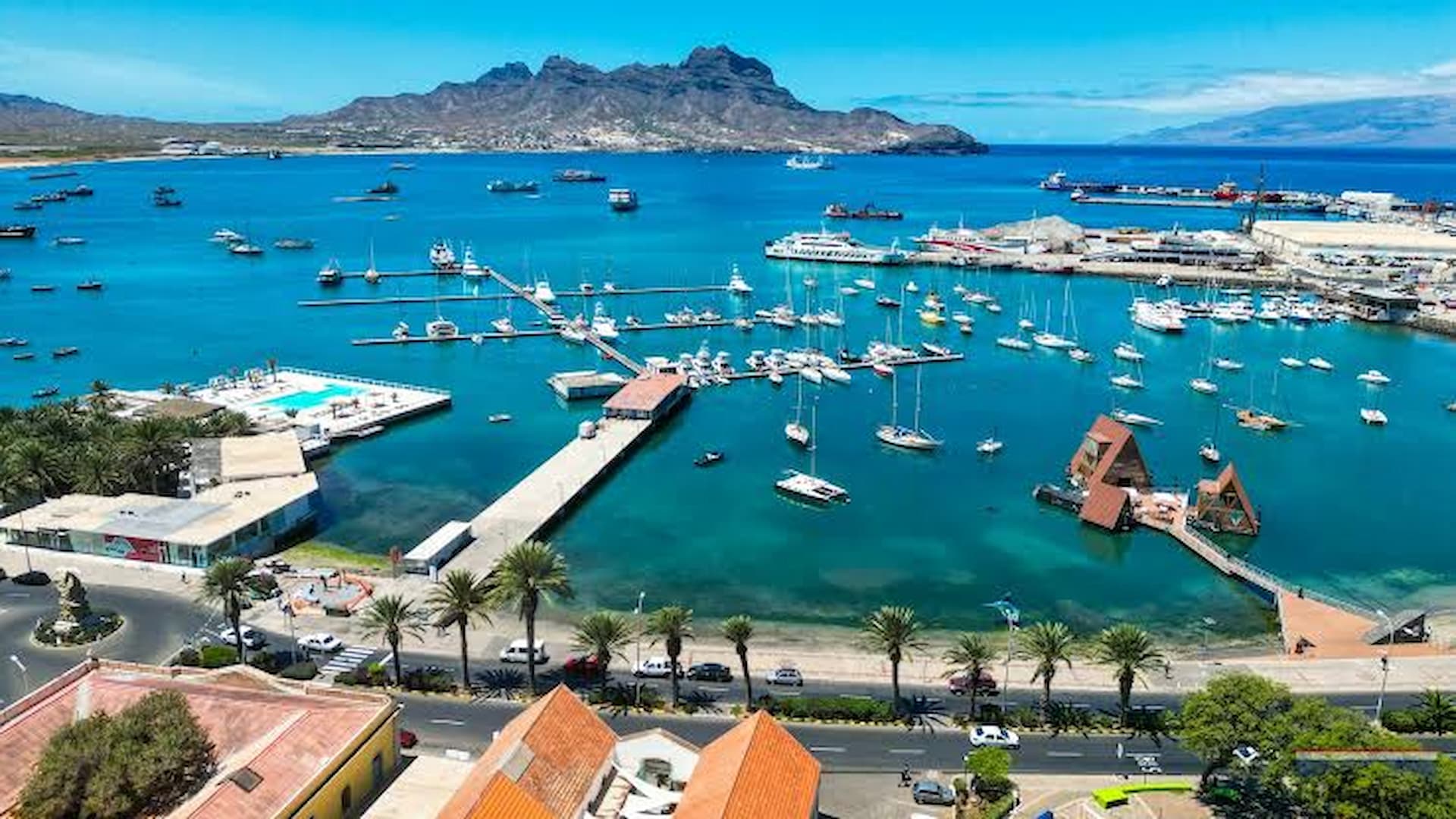
Your day begins where the island’s culture is loudest. By 8:30 AM, the wooden pier (Pontão) in Santa Maria is already bustling. This is the exact window when local artisanal fishermen return in their colorful wooden boats, battling the Atlantic waves to haul in massive yellowfin tuna, wahoo, and amberjack.
The Inside Detail: Walk right to the edge of the wooden planks. You will see local fishmongers expertly scaling and filleting fish on-site while manta rays glide through the turquoise water below, scavenging for scraps. It is a vibrant, fast-paced display of Cape Verdean daily life.
10:00 AM – Murdeira Bay & The Sleeping Lion
Heading north along the EN1-SL01 highway, your first scenic stop is Murdeira Bay — a sweeping, rocky bay that is a protected marine nature reserve and a critical nesting ground for loggerhead sea turtles (Caretta caretta).
The Photographic Catch: Look across the water toward the horizon. The volcanic rock formation rising from the sea is Monte Leão (Lion Mountain). From this exact angle, the mountain silhouette looks identical to a giant lion lying down, guarding the bay.
11:00 AM – The Mirage at Terra Boa
Passing through the capital city of Espargos, you hit the unpaved desert tracks leading into the flat, arid plains of Terra Boa.
The Illusion: As you look toward the horizon over the dry, cracked earth, a massive shimmering lake appears out of nowhere, reflecting the sky. This is not water — it is an authentic desert mirage caused by hot air layers bending sunlight over the flat topography.
11:45 AM – The Blue Eye at Buracona (Timing is Everything)
Next, the track leads to the rugged basalt coastline of Buracona — a dramatic cluster of natural volcanic rock pools where the ocean crashes violently into dark caves. The main attraction is the Olho Azul (Blue Eye).
The Logistical Secret: Do not visit Buracona early in the morning or late in the afternoon. The Blue Eye — a phenomenon where an underwater cave opening glows with a blinding turquoise light — only occurs when the sun is positioned directly overhead. The ideal window is strictly between 11:30 AM and 1:30 PM.
The Cost: Government entry fee is 300 CVE (approx. €3). There is a clean Eco-Museum on-site and a safe natural pool where you can swim if the sea swell is calm.
01:00 PM – Authentic Catchupa Lunch in Espargos
Note: If coming from Buracona, head back through Espargos before continuing east to Shark Bay.
Skip the overpriced tourist cafes near the coast and head into the residential backstreets of Espargos for lunch. Find a local Pastelaria or Churrasqueira and order a traditional plate of Catchupa Rica — a slow-cooked stew of hominy corn, local beans, plantains, and marinated pork or tuna. It is hearty, delicious, and costs a fraction of resort prices (around 500 CVE / €5).
02:30 PM – Wading with Wild Sharks at Shark Bay
Heading to the rugged eastern coast, you arrive at the rocky shoreline of Shark Bay (Feijoal) — the natural nursery of wild Lemon Sharks (Negaprion brevirostris).
The Experience: You will change into rubber water shoes and wade out 20 to 30 metres into the shallow, reef-protected water. Within minutes, juvenile and adult lemon sharks (ranging from 1 to 2.5 metres in length) will swim peacefully around your legs. They are completely non-aggressive fish-eaters and remarkably calm in their natural habitat.
The Trap: The volcanic rocks underfoot are razor-sharp and coated in slippery moss. Do not attempt to walk out in flip-flops or bare feet. Local beach wardens rent heavy-duty rubber reef shoes for 200 CVE (€2).
04:00 PM – Floating in the Pedra de Lume Volcanic Salt Crater

Your final stop is the grand finale: the salt pans of Pedra de Lume, located inside the belly of an extinct volcanic crater. Because the crater floor sits below sea level, ocean water naturally infiltrates through the porous rock and evaporates, creating a dense, neon-pink and white salt lake.
[Pedra de Lume Logistics]
- Entry Fee: 500 CVE (€5)
- Salt Density: 26x higher than normal ocean water
- On-site Showers: 100 CVE (€1) — Essential to wash off the salt crust
The Feeling: Walk down the wooden pathways into the lake. Your body achieves instant, effortless buoyancy — you simply cannot sink. Floating on your back like a cork, you will feel the full relaxation of one of nature’s most unusual sensations, which is also fantastic for the skin.
Why Booking an Organised Guided Tour is Safer
While you can technically rent a 4×4 Suzuki Jimny in Santa Maria to do this route independently, there are significant hidden risks:
- Unmarked Desert Tracks: There are no road signs leading through the desert to Terra Boa or Shark Bay. Getting lost or stuck in loose sand can result in costly recovery fees.
- Insurance Vulnerability: Standard car rental insurance on Sal strictly voids coverage the moment you leave asphalt roads. Any damage to the vehicle’s undercarriage on sharp volcanic rocks is paid entirely out of your pocket.
- Local Safety Know-How: Knowing when the tide is too high to safely enter Shark Bay, or when sea swell makes the Buracona pools dangerous, requires daily local maritime experience.
Let Us Drive, Guide, and Take Care of the Details
Our Certified Sal Island Full-Day Tour covers this exact master route in a fleet of modern, air-conditioned 4×4 vehicles. You will be accompanied by an experienced native guide who handles the driving, entry logistics, and the deep history of our island — all with our famous “No Stress” philosophy.